
What Is HCBS? A Complete Guide to Home and Community-Based Services
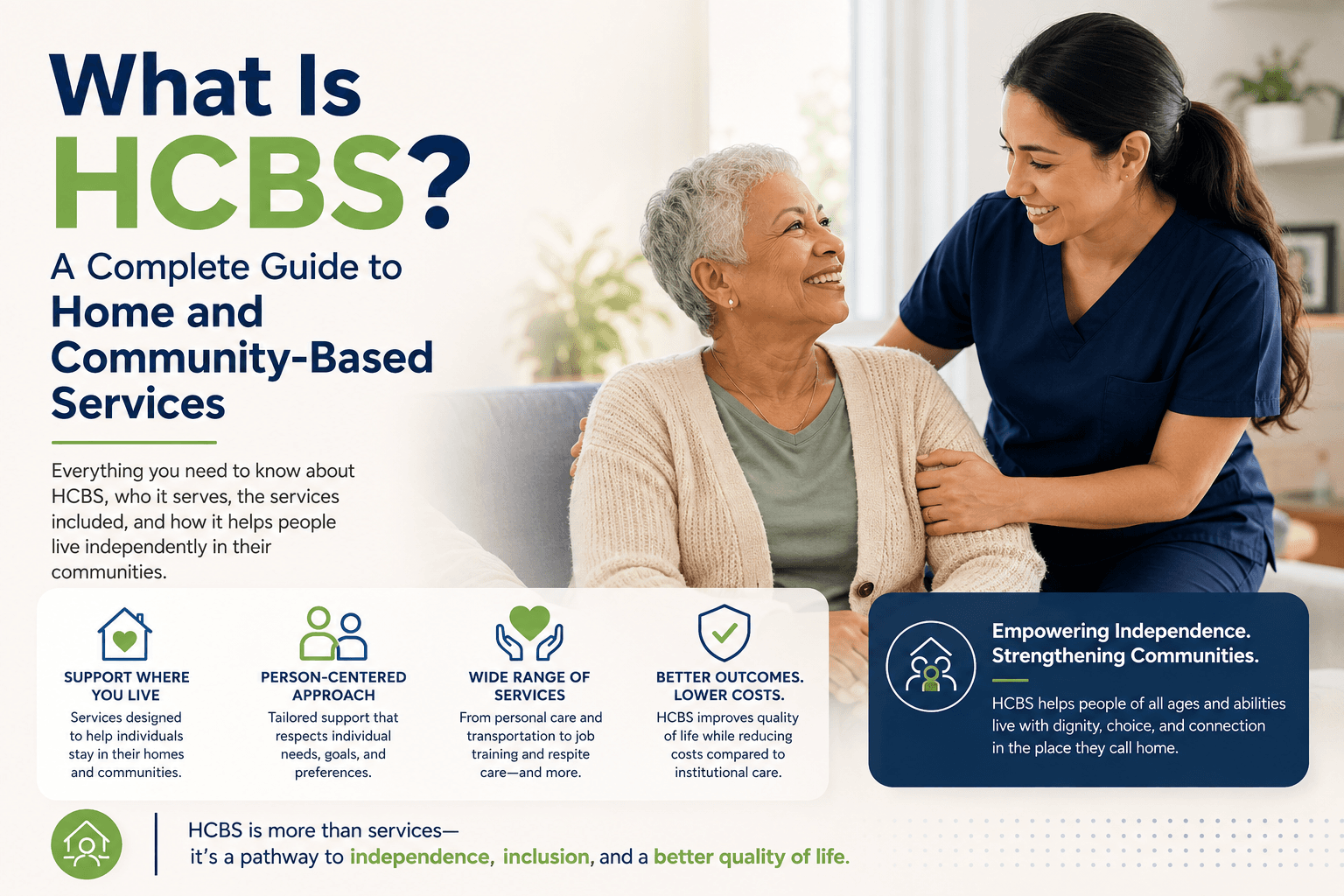
Learn what HCBS is, who it serves, how Medicaid waivers work, and the compliance obligations every stakeholder needs to understand.
If you work in Medicaid, long-term services and supports, or aging and disability policy, you have almost certainly encountered the question: what is HCBS? Home and Community-Based Services is one of the most consequential corners of the US Medicaid program, and understanding it is essential for state agencies, managed care organizations, assessment entities, and provider organizations alike.
This guide covers the fundamentals: what HCBS is, who qualifies, how federal waiver authority works, what the federal settings and quality rules require, and where compliance obligations live. Each section points to deeper topics covered elsewhere in CertifyMed Insights.
The Basic Definition of HCBS
Home and Community-Based Services is a category of Medicaid-funded long-term services and supports delivered in settings other than nursing facilities or hospitals. The core idea is straightforward: people with disabilities, older adults, and individuals with chronic conditions should be able to receive the care they need in their own homes, in the homes of family members, or in community settings that feel and function like real homes, rather than institutions.
HCBS encompasses a wide range of services. Personal care assistance, homemaker services, adult day health, respite care, supported employment, skilled nursing visits, assistive technology, and home modifications are all examples. The precise service array varies by state and by the specific authority a state uses to fund those services.
Who HCBS Serves
HCBS programs serve people of all ages who have a functional or clinical need that would otherwise require institutional-level care. Broadly speaking, the population includes older adults who need assistance with daily activities, people with physical disabilities, individuals with intellectual and developmental disabilities (IDD), people with serious mental illness, individuals with traumatic brain injury, and children with complex medical needs.
Eligibility is determined through both a financial test, meaning income and asset limits set by the state, and a functional or clinical test, meaning the person must meet a level-of-care standard that would qualify them for care in a nursing facility or another institution. That functional assessment is a critical gateway to HCBS enrollment, which is why standardized tools matter so much to the programs. CertifyMed supports this step through its interRAI assessments module, which helps assessment entities administer and document functional evaluations consistently.
Demand for HCBS consistently outpaces available funding and workforce capacity, which is why many states maintain waiting lists. Managing those lists, tracking eligibility, and coordinating transitions onto services are ongoing operational and compliance challenges.
How Medicaid Funds HCBS: Waivers and State Plan Options
Federal Medicaid law has historically required states to cover institutional care as a mandatory benefit, but HCBS has generally required a waiver of standard Medicaid rules to be covered. Over time, CMS has created several distinct pathways.
The Section 1915(c) waiver is the most widely used vehicle. It allows states to offer HCBS to targeted populations as an alternative to institutional care. States must demonstrate that HCBS will be cost-neutral compared to institutional care and must comply with a set of assurances related to participant rights, health and welfare, and quality of care.
The Section 1915(i) state plan option allows states to cover HCBS without a waiver for individuals who do not necessarily meet an institutional level of care, broadening reach to people with lower needs. The Section 1915(k) Community First Choice option allows states to offer attendant care services at an enhanced federal match rate in exchange for meeting additional structural requirements.
States can also use Section 1115 demonstration waivers to test broader systemic reforms, including managed LTSS models where MCOs take responsibility for HCBS alongside acute care. Understanding which authority a state uses is the first step in knowing which rules apply.
The HCBS Settings Rule
The federal HCBS Settings Rule, issued by CMS, is one of the most significant regulatory developments in the history of these programs. It requires that settings where Medicaid HCBS are delivered meet specific criteria that ensure they are integrated in and support full access to the greater community.
Under the rule, HCBS settings must allow participants to have rights of tenancy, must not isolate individuals from the broader community, must allow individuals to make choices about their daily schedules and activities, and must ensure access to visitors and community activities. Certain settings, such as those located in or adjacent to institutional facilities, are presumed to have an institutional character and must go through a heightened scrutiny process to demonstrate compliance.
States were required to transition all settings and waivers into compliance with the Settings Rule over a period set by CMS. Provider organizations that operate group homes, adult day programs, or residential settings need to understand whether their settings meet these standards. A failed settings determination can put both provider certification and waiver funding at risk. Our compliance dashboard helps organizations track their settings documentation and remediation timelines in one place.
Key Federal Quality and Oversight Requirements
Beyond the Settings Rule, states operating 1915(c) waivers must meet a set of federal assurances that touch on every layer of program operation. These include assurances related to level-of-care determinations, service planning, health and welfare protections, financial accountability, and a quality improvement system.
The quality improvement system requirement is particularly important for state agencies and MCOs. CMS expects states to collect data on critical incidents, monitor service delivery against person-centered plans, and use that data to drive program improvements. This is not a check-the-box exercise. Auditors look for evidence that quality data is actually informing program decisions.
CMS also requires that HCBS participants have access to independent advocacy and that states operate effective complaint and grievance systems. For MCOs administering managed LTSS, additional requirements under Medicaid managed care regulations apply, including network adequacy standards for LTSS providers and care coordination requirements.
Workforce qualifications are another federal focus area. States must ensure that HCBS workers meet training and competency standards, and many states are strengthening those requirements under broader workforce initiatives. CertifyMed's workforce compliance tools help organizations track worker credentials, training completions, and background check status to stay ahead of audit exposure.
Person-Centered Planning: The Heart of HCBS
Federal rules require that HCBS be delivered under person-centered service plans developed in partnership with the individual and, where appropriate, their family or chosen supports. A person-centered plan is not simply a list of services. It must reflect the individual's preferences, strengths, and goals. It must identify risks and how those risks will be managed in a way that respects individual choice. And it must be revisited at regular intervals.
Person-centered planning is both a compliance requirement and a quality standard. Plans that are generic, incomplete, or clearly not driven by the individual's voice are a common finding in state and federal audits. For case managers and support coordinators, having a structured, documented process for developing and updating plans is essential.
CertifyMed's case management module is designed to support the person-centered planning process by giving care teams a structured workflow that captures participant goals, preferences, and service authorizations in a format that meets federal documentation standards.
HCBS Compliance: Where Obligations Live
HCBS compliance is not the responsibility of a single entity. It is distributed across the entire program ecosystem. State Medicaid agencies are ultimately accountable to CMS for waiver assurances, but they carry out oversight through contracts with MCOs, agreements with assessment entities, and provider enrollment standards.
MCOs that administer managed LTSS must build robust monitoring systems, ensure network providers meet state and federal standards, and report quality data back to the state. Assessment entities must administer standardized functional assessments consistently and document findings in ways that support fair eligibility determinations. Providers must document service delivery accurately, maintain staff qualifications, and operate settings that meet the Settings Rule.
Common compliance failure points include inconsistent level-of-care assessments, person-centered plans that do not reflect actual participant input, gaps in critical incident reporting, unqualified or inadequately supervised workers, and settings that have not been formally reviewed under the Settings Rule. Each of these areas is an active focus of federal and state oversight.
Why HCBS Compliance Matters More Than Ever
Federal investment in HCBS has grown substantially in recent years, driven by legislation aimed at reducing waiting lists, strengthening the direct care workforce, and expanding access for people who have historically been institutionalized. With greater investment comes greater scrutiny.
CMS has sharpened its monitoring of waiver programs, and states are under increasing pressure to demonstrate that HCBS dollars are reaching participants effectively. States that cannot demonstrate adequate oversight risk enhanced federal monitoring or conditions on continued waiver approval.
For every organization in the HCBS ecosystem, the message is the same: compliance is not a back-office function. It is a program-wide discipline that requires clear processes, reliable data, and consistent staff training. CertifyMed was built specifically for this environment, connecting the assessment, planning, case management, provider qualification, and quality reporting functions that HCBS compliance demands.
This post is the starting point. Explore linked articles in CertifyMed Insights for deeper dives into the HCBS Settings Rule, person-centered planning requirements, 1915(c) waiver assurances, managed LTSS compliance, and workforce standards.
CertifyMed Blog
Clinical & Assessments
Translating assessment science into practical guidance for HCBS providers.
Walk into your next survey ready.
See how state agencies, MCOs, and provider networks run assessment, care planning, and continuous compliance on one platform.